Friday I discovered a new tool and how to use it. The Dremel. This is a tool with a similar mechanism to a drill but a different function. Instead of making holes in things it is used for etching and creating texture. My trusty scraps of wood were made into a textural experiment and without fail they produced some visually pleasing results.
Then, over the weekend I went to beervana; an awesome festival about all things beer. Aside from sampling a few and then a few more drinks I kept an eye out for anything relating to materials. What intruiged me was the wristbands that we each were issued as we entered and then discarded once we left. These are ideal for their purpose of money transfer but after they are used apparantly get thrown away. How could I recycle them?
The white plastic chip contains a copper ring that contains a small amount of data.
The small amount of copper wire could hold potential for creating a single larger object. Or something reactive.
This weeks task is so far the one I looked forward to least. I am not confident in dealing with chemicals, I see them as dangerous and unnatural, I even sometimes call perfumes and liquid soaps poisons.
One idea that appealed to me however was relating chemical change back to high school science and also to food.
Topical at the moment as ever is the presence of acidity in coke products. Particularly in regards to children's dental hygiene.
A brief visit to the supermarket and I had purchased two contradictory products; Coke, and toothpaste.
By pouring coke into a pot and boiling it the water was able to evaporate out and increase the acidity .
A close look at some metal pieces boiling in coke.
A Bubbling cavity maker.
After boiling it for a while I split it into two mixtures, each with half of the metal in them, one I left as it was, the other, I mixed in some toothpaste. I thought it might bubble as it neutralized with the coke, but it may have neutralized in a more subtle less reactive way.
I also applied some basic toothpaste to some metal screws and other bits,
Made for cleaning our teeth, what will it do to metal?
I left the toothpaste metal for a couple hours, then I added some boiling water to heat and dilute the toothepaste, and also more fully coat the steel.
My second attempt at melting plastic I decided to do outside over an open fire; thus reaching a higher heat and allowing for a more complete melt.
I created a large sheet of plastic with no recognizable shapes, and instead just a dark mixed up colour and specks of prior colours.
To create this large sheet I needed to build a new mold out of wood and mdf, using hammer and nails to put it all together. The mold was then lined with tin foil to help the plastic not to stick to the wood.
I was able to chop into the plastic with a coping saw. The inside of the plastic looked much the same as the outside.
Down in the workshop I armed myself with a heat gun and aimed it one of the cuts, remelting it. Next I held them together and created a new shape, a simple join.
The simple join isn't the tidiest, but with practice I'm sure I can create something beautiful.
After washing my plastic I chucked some of it into an old pot and melted it down. I did it in the kitchen with the extractor fan on full blast. Supposedly the correct plastic (Recyclable plastic 2) won't let of any toxic fumes, so I must not have identified all of plastic correctly because it smelled terrible.
I estimated that it was all thoroughly melted without opening the lid to check.
I took it outside, scooped it out onto my pre-made sandwhiching board (mdf coated in tin foil) and clamped it tight shut.
Every 10 or so minutes I tightened the clamps. Plastic shrinks when it cools and this prevents cracking and bubbling.
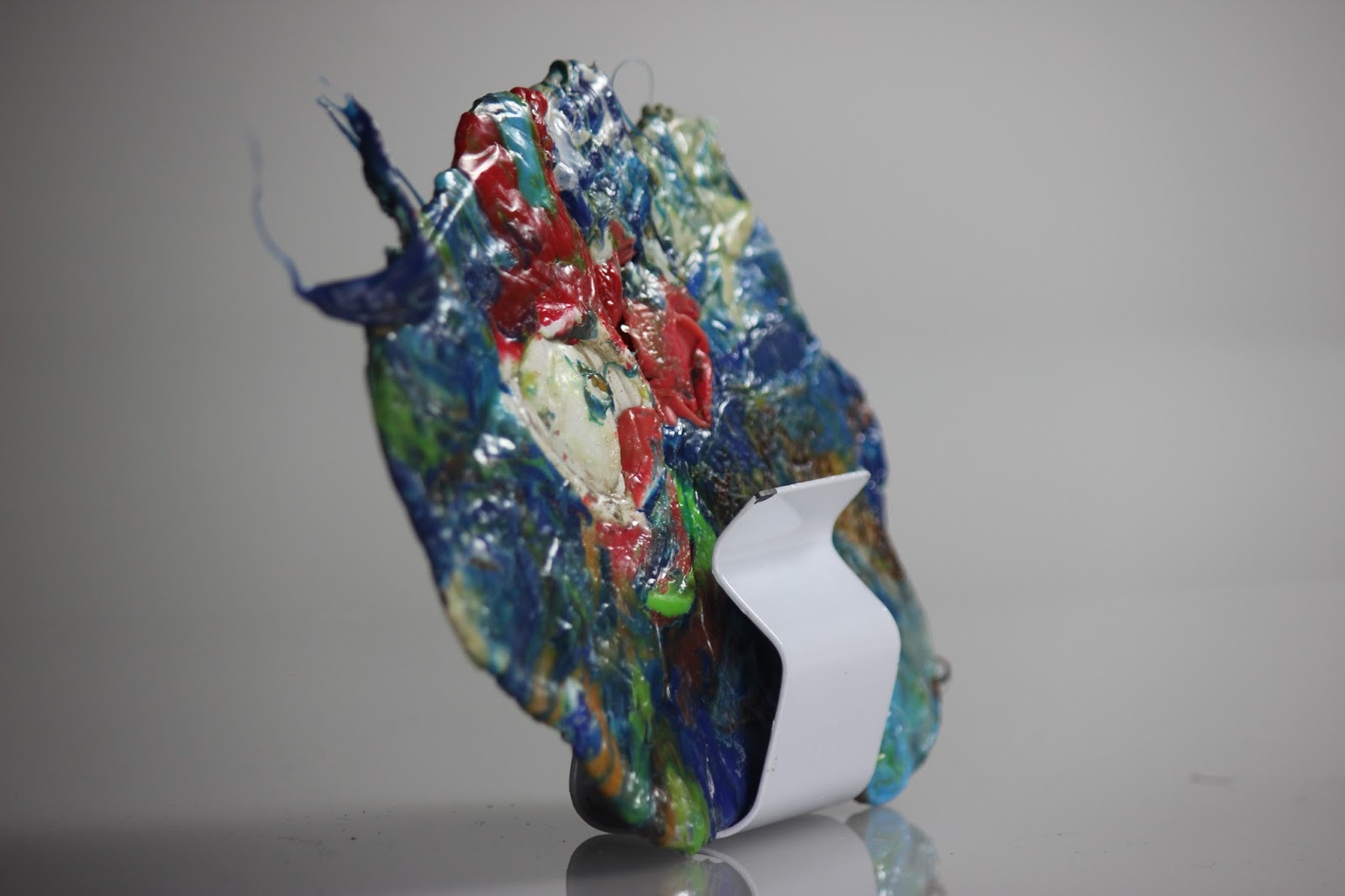
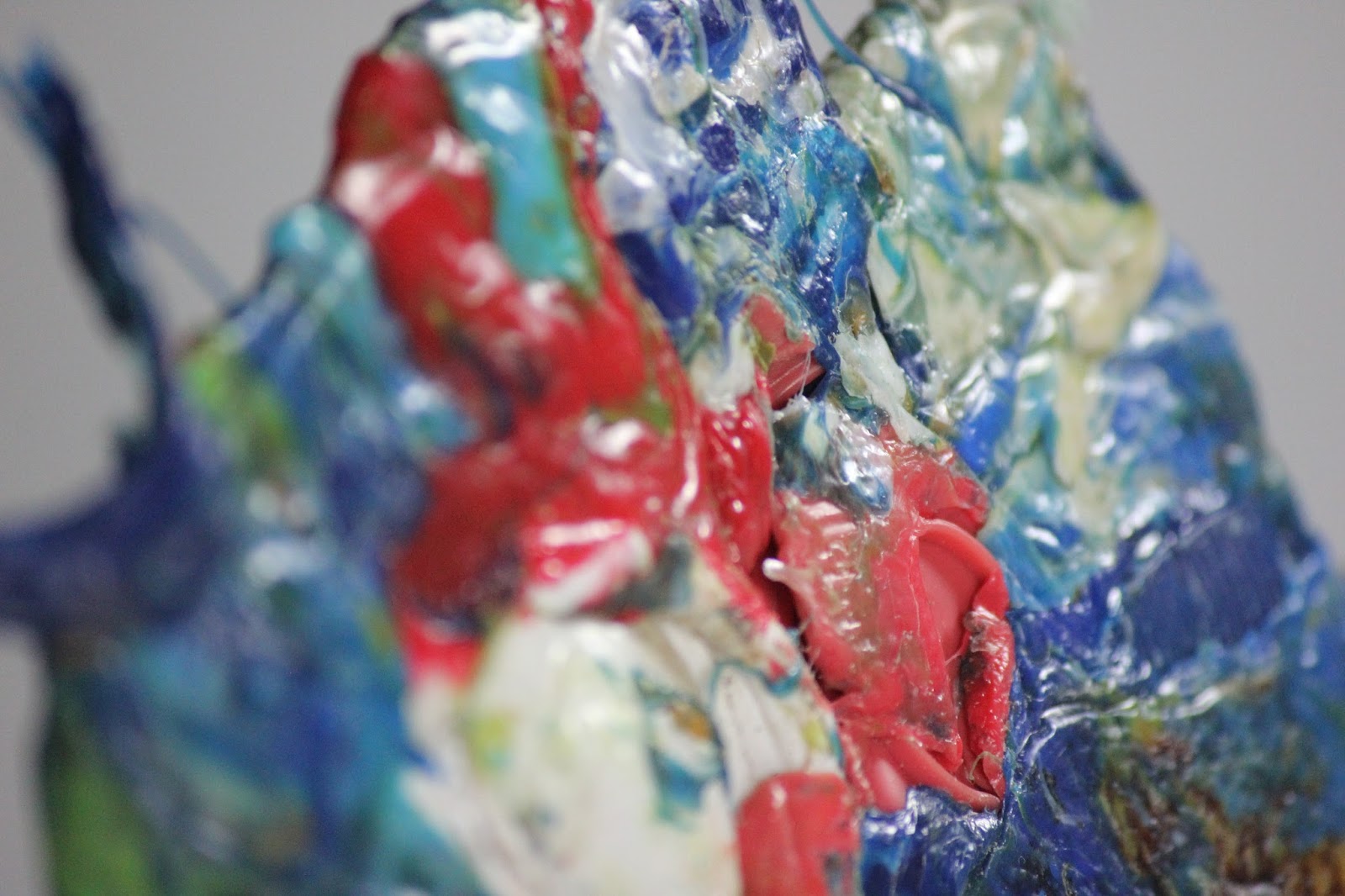
After an hour of cooling I opened up my sandwich press to find this: a colourful globular pancake of plastic. Some pieces had melted better than others.
There were numerous interesting colours and shapes, so I took a fair few photos.
This image is my chosen favourite for the week.
The presence of the green boottle cap from a bottle of 'kiwi-blue' stands out for me. It isn't completely melted and has significant meaning to it.
Most brands of water, especially in New Zealand like to proclaim themselves as pure and good for the environment, however this doesn't stop the consumer of the product from dumping the bottlecaps on the beach or in a river.
Something so 'pure' can be washed out to sea, eaten by fish,birds, or other animals and choke them to death.
I also liked the comparison of beach plastic, and the practical plastic in the photo lab reflecting the image.
By once again reflecting back on methods of manipulating materials that I have worked with in the past; and thinking of my desire to work with natural materials, I was able to link the creation of paper to the use of plant matter.
I started with some balloons and some cardboard, this made some interesting shapes that could then be Papier-mached over.
The first example was purely paper and tissues, this created a strong composite.
The inside of the structure still retained the cardboard nase, the balloon however, had popped.
The two pieces of one shape were cut in half and display their interesting shape.
A close up of the assorted paper pieces used.
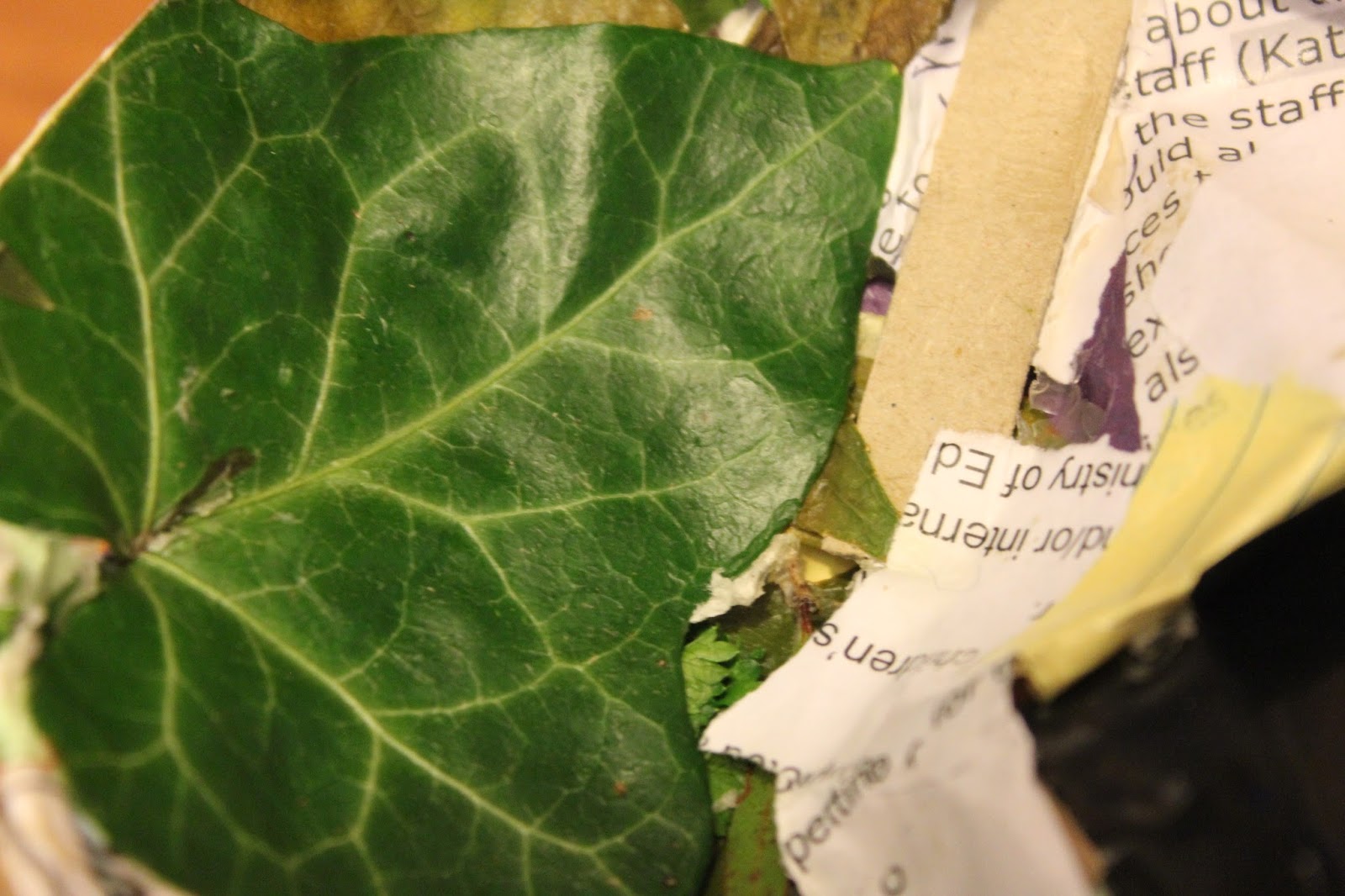
In a fairly crude way I made a paper mache incorporating large pieces of leaves.
The paste that stuck it all together was made from a combination of flour and water.
Some leaves pasted really well against the paper.
My attempts to paste various green leaves on took me to the herb garden. Parsley was more difficult to stick on.
I boiled some leaves, through the boiling some discolouring occurred.
Once dry, the paper/leaf bowl was thin, yet strong. The many layers held it together nicely. I believe that after an amount of time the leaves will begin to decomepose and lose their colour and potentially their stickability. It was a good experiment but I don't think I will continue in this area of exploration.
Over the course of my university life I have been able to define myself as a designer by what interests me and what I think is important. The two things that this comes down to are
1: D.I.Y., The culture that surrounds it, the practice of doing it, and all of the benefits that go along with that.
2: Sustainability, creating in a sustainable way that does not impact the earth negatively, whether this be recycling old materials, making the most of green spaces, or any number of other things.
Our second lecture of this course was inspiring to say the least. As soon as I saw the calm waves seen of the video below I knew I was watching something special.
I'll try not to get too poetic about my feelings towards this video, but I thought two things after watching this video for the first time. 1. Why aren't more people doing this, and 2. I have to do this.
After a small internet search I found a couple of videos showing that people already are doing this on an amateur level.
See the videos here for a gow to turn old plastic into a new and beautiful slingshot.
Needless to say it was my turn to have a go.
I started with a walk on my local beach in Makara.
My girlfriend Shellie and I walked the beach for 40 minutes filling our buckets to the top. There were bottle caps and plastic rope, and all other plastics you can think of.
Back at home this is our haul.
Before I could use it it needed to be sorted and washed.
Here is your daily dose of disturbing images.
As seen here, plastic discarded from people everyday that gets washed down rivers and out into the ocean gets mistaken for food by birds such as the three species of endangered albatross (There are a further 19 species of threatened albatross).
In an ideal world everyone would go out into the ocean, or down to the beach, fish out some old plastic, and use that instead of making more new stuff.
I want to work further in the area of plastic recycling. More to come.